MVP development company for founders and product teams who need real users in 4–6 weeks
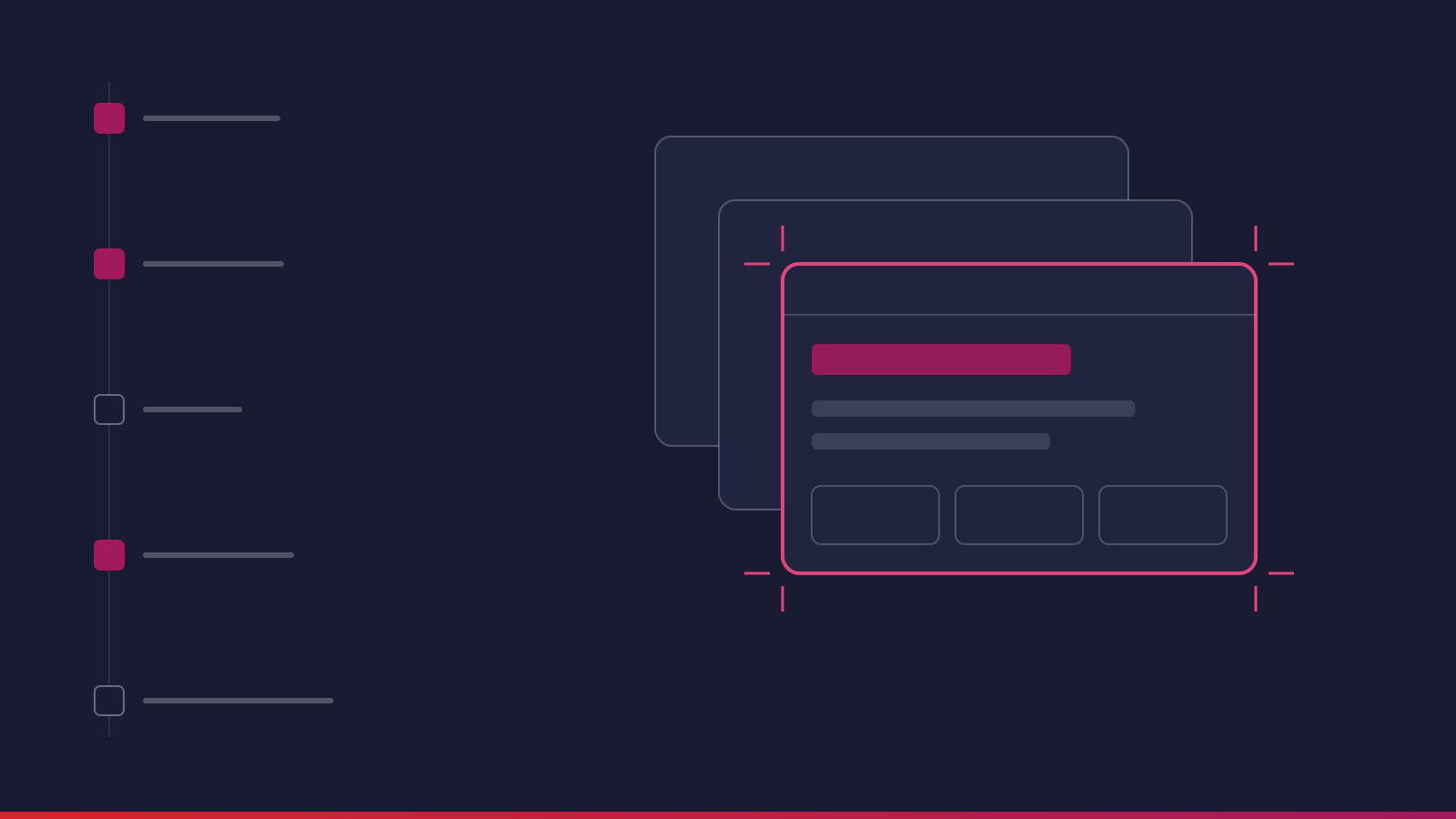
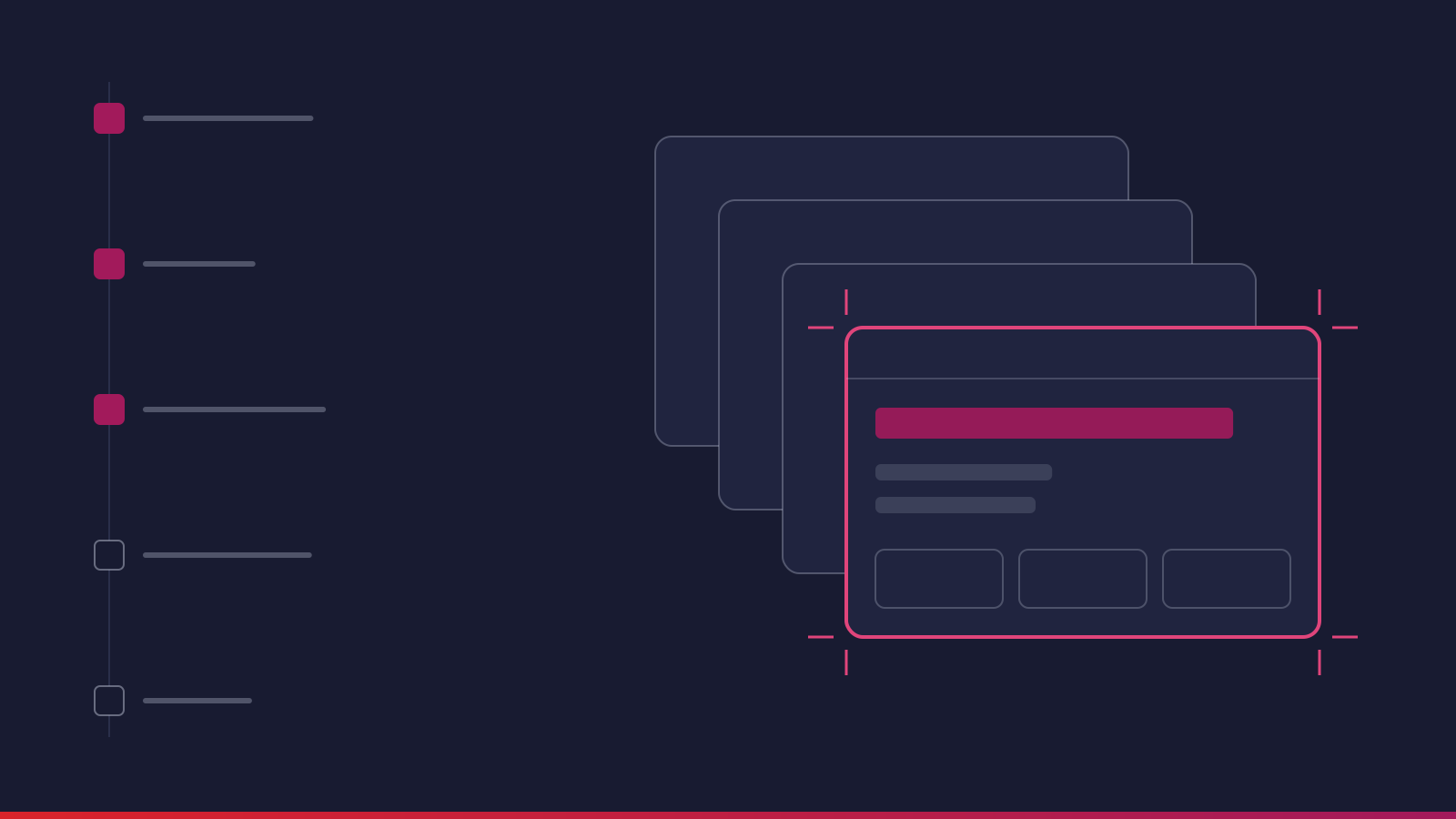
Four to six one-week cycles, each ending in a demo, from discovery to a deployed product with real users on it. The first release does three things well, and everything else waits with a written reason.
- React
- Node.js
- Python
- Flutter
- PostgreSQL
- AWS
- Product idea
- Funding milestone
- Fixed 4–6 week window
- 01 Discoverythree things release one must do
- 02 Ideationrough flows, most rejected cheaply
- 03 Tested designprototype tested with users twice
- 04 Build and launchtests, monitoring, rollback
- Deployed MVP
- Release two backlog
- Real user analytics
What you get
7 deliverables, all yours to keep
- Signed first-release statement and release two backlog
- Clickable prototype tested with real users
- Deployed MVP with authentication and monitoring
- Automated tests and deployment pipeline
- Rehearsed rollback for every deployment
- Handover documentation and release two plan
- Code, cloud accounts and analytics you own
Sound familiar?
Who works with an MVP development company, and why
Founders and product owners usually look for an MVP development company after the first attempt to scope an MVP has grown into a full product plan. We answer with a fixed 4–6 week cycle that ends in a deployed product with real users on it. The first release does three things well, and everything else waits with a written reason.
The code shipped at launch is the code release two builds on. Some firms mean a clickable prototype by the word MVP, others a year of build under a smaller name, so check what each one means. The full sprint list, including what we refuse to cut, is in our sprint breakdown. If your product overlaps with Commerce & Affiliate, much of the system already exists and the four to six weeks go further.
-
A funding milestone that needs paying users, not a slide
A clickable demo does not meet the milestone. Paying users on a deployed product do.
-
An enterprise innovation team with a quarter to show something real
The sponsor and budget are in place, but the quarter ends long before a full product plan could ship.
-
A SaaS company testing a second product
The engineers are needed on the first product, so the second one has nobody to build it.
-
A spreadsheet and a messaging group standing in for a product
Customers cannot use it directly, so every request passes through someone on your team.
-
A previous agency spent six months on features nobody asked for
The budget went on a full product plan, and there are still no users on anything.
-
A non-technical founder who needs someone to say what waits
Without a written reason for each cut, every feature feels essential and the MVP grows into a full product.
The work
Inside a MVP Development engagement.
What goes into a 4–6 week MVP
-
A real product, not a prototype
Proper authentication, the core workflows agreed in discovery, a production database, error reporting and a deployment pipeline.
-
The third feature, cut every time
Admin screens wait, because in release one we configure settings by hand on your behalf. Integrations that can be a CSV import for a month wait too.
-
SaaS decisions that cannot be deferred
Tenant isolation, how accounts and users relate, and where subscription state lives are decided in design, because changing them after launch means migrating live customer data.
-
Usage analytics from release one
Billing can start simple. Instrumentation cannot, because the point of an MVP is to learn which features people open. We built HireNXT on the same principles.
-
Code that release two builds on
It is not a throwaway. Tests, the pipeline and a sensible data model are in from the start, so the launch-week code carries forward.
How we run MVP development
- 01
The sequence matters more than the speed
Discovery with users in week 1, ideation in week 2, design with a prototype tested twice in week 3, build in weeks 4–5, then stabilization and launch in week 6.
- 02
Architecture is settled in design, not in week one
It is decided once the product is known to be right, so it fits what users tested rather than an early guess.
- 03
Technology follows the product
A web app in React and Node.js covers most MVPs. Mobile is added only where the product needs the device.
- 04
A demo every week
You see working software each week and speak directly to the engineers building it.
Where MVPs go wrong, and how we prevent it
-
Scope creep dressed as feedback
The signed first-release statement comes to every review. New ideas go on the release two list with a reason, and scope moves only by swapping items.
-
Skipping discovery to save a week
It costs a rebuild. Every time we have seen it done, the product needed substantial rework, so discovery is never cut.
-
User sessions that never get booked
Every session for the full cycle is booked in week one, before we know what we will show.
-
A promised data source that does not arrive
Release one gets a file import, release two gets the API, and the launch date stays where it was.
-
Launching without tests, monitoring or rollback
None of these are negotiable. A product launched without them is a liability from its first day.
How it runs
From first call to production.
-
Week 1: Discovery
Interviews and observation with the people who will use the product. The output is a one-page statement of what release one does, three things at most.
-
Week 2: Ideation
Flows sketched and turned into a rough prototype, most of them rejected in user sessions. The data model is drawn from the flows that survive.
-
Week 3: Design
High-fidelity clickable prototype tested with users at least twice. Architecture is settled here, against a design known to work.
-
Weeks 4–5: Development
Engineers build against answered questions. Tests are written with the code, and anything that will not fit moves to release two with the reason recorded.
-
Week 6: Stabilize and launch
Real users in production with monitoring on, bugs fixed, performance checked under realistic load, and handover.
Team and timeline
4–6 weeks
from discovery to real users
Indicative. Actual duration depends on requirements and complexity, and can change.
Who works on it
- Product consultant
- UI/UX designer
- Two or three full stack developers
- QA engineer
- Mobile developer when needed
Engagement model
Fixed Cost against the signed first-release statement. A Dedicated Team afterwards if you want us to carry the product into releases two and three.
Good to know
Your side provides one decision-maker who can answer product questions within a day, and real users for the sessions booked in week one. Code, cloud accounts and analytics are set up in your name from the start.
Proof
Where we have built this.

HireNXT: the AI staff augmentation platform we built
faster external talent onboarding

How a global AI SaaS company improved conversion rates by 18%
enhanced KPI visibility

How a global fashion retailer increased customer engagement by 34%
increased customer engagement
FAQ
MVP Development: common questions.
What does an MVP development company actually deliver?
A working product in production with real users, not a prototype or a pitch demo. Ours includes authentication, the core workflows agreed in discovery, automated tests, a deployment pipeline, monitoring and a rollback. You also get the reasoned backlog for release two, so the features that were cut are recorded with the evidence behind each decision rather than forgotten.
What do you need from us during an MVP build?
Less time than most founders expect, but at the right moments. One person who can make product decisions within a day, so questions do not queue. Access to real users for interview and prototype sessions, booked in week one. Cloud, domain and app store accounts created in your name, and credentials for any data source release one depends on. Attending the weekly demo is the standing commitment.
How much does MVP development cost?
It depends on how many user types the product serves, how many external systems it must talk to, and whether it needs web and mobile at launch. Those three drivers move effort more than screen count. We quote a fixed price after discovery, against a signed first-release statement, so the number is tied to a scope you have agreed rather than to a guess.
Should my MVP be web or mobile first?
Web first, in most cases. A responsive web app reaches every user without app store review, and changes ship the same day. Go mobile first when the product depends on the camera, location, offline use or push notifications from day one. If you need both, Flutter or React Native gives one codebase for iOS and Android alongside the web app.
What happens after the MVP launches?
You choose. Some teams take the product in-house, and we hand over with documentation and a transition plan. Others keep a small pod with us to build release two from the backlog discovery has been feeding since week one. Either way you own the code, the cloud accounts and the analytics from the first day.
Related services
- Custom Software DevelopmentEnterprise platforms, workflow systems and software products built around how your organization works, with the architecture decided for the load you will have.
- Web Application DevelopmentSaaS platforms, customer portals, commerce and internal systems in React and Node.js, with performance, accessibility and tenancy decided before the first sprint.
- Mobile App DevelopmentiOS and Android apps for customers, patients, partners and field teams, in Flutter, React Native or native code, built on a backend designed to serve web and mobile.