Legacy application modernization without the big-bang cutover
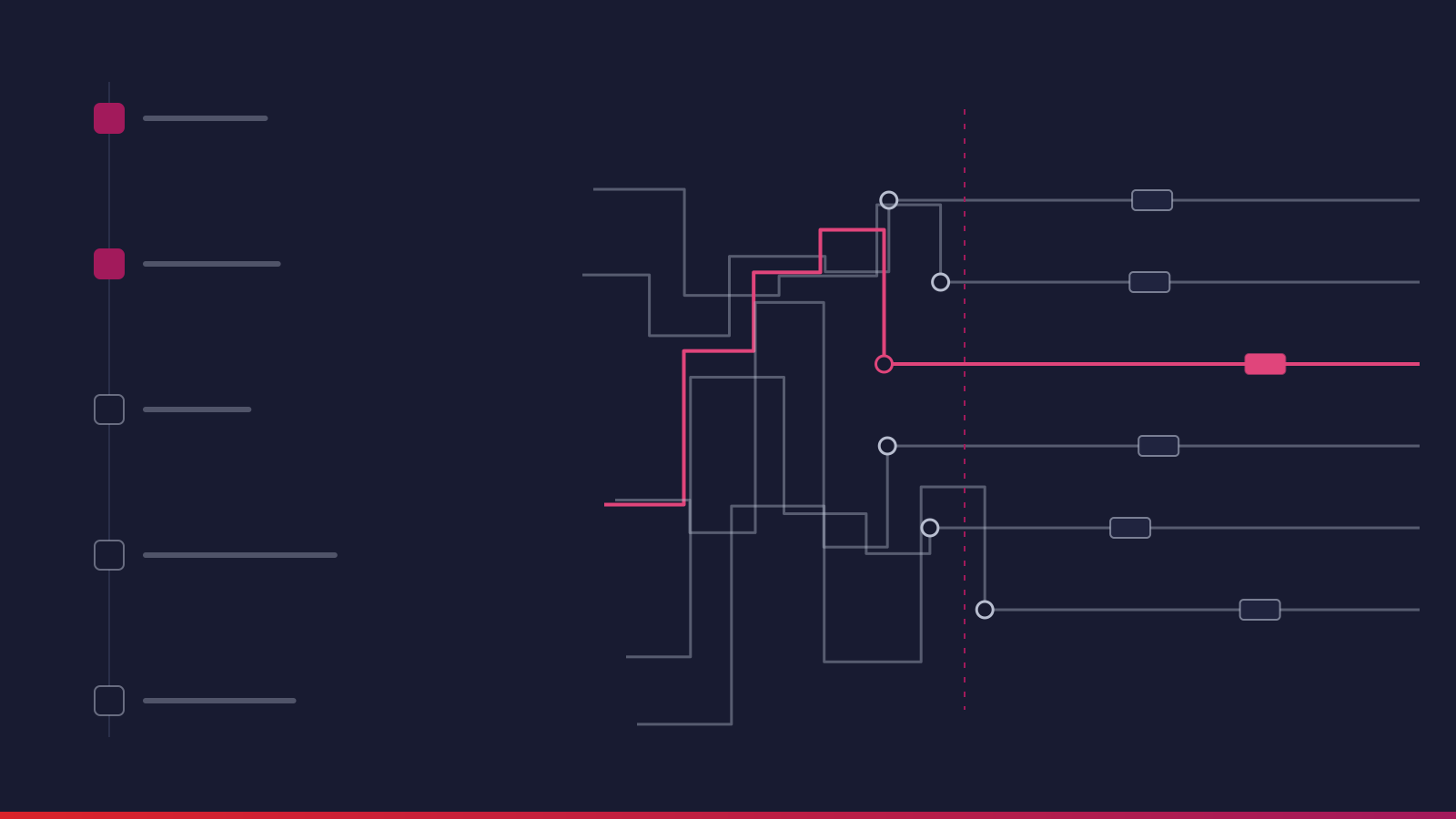
The old system keeps running while functions move across one at a time. Each slice goes live on its own, runs in shadow beside the old path, and can be rolled back.
- React
- Angular
- Node.js
- Python
- PostgreSQL
- AWS
- Event streams and REST APIs
- Legacy codebase
- Undocumented manual steps
- Nightly file exports
- 01 Map the systemcode, integrations, operator interviews
- 02 Rebuild one sliceUI, logic, data and integrations
- 03 Run in shadowoutputs compared, not acted on
- 04 Cut overafter a rehearsed rollback
- Reversible live components
- Reconciled data
- Retired legacy modules
What you get
7 deliverables, all yours to keep
- System map of code, data, integrations and manual steps
- Risk register and slicing order
- Re-engineered components with contracts and tests
- Shadow-mode comparison reports
- Data migration scripts with reconciliation checks
- Rehearsed rollback procedure per slice
- Legacy module retirement plan
Sound familiar?
Who comes to us for legacy application modernization
Legacy application modernization is rarely triggered by the technology itself. It starts when the business notices it cannot change anything. We keep the old system running while functions move across one at a time, each running in shadow beside the old path and each reversible. Every engagement starts with a one-to-two-week assessment of the code, the integrations and the people who operate the system.
A large-scale energy enterprise ran as a 24 month engagement, replacing manual KYC and paper approvals function by function. The full method, including how shadow runs expose rules nobody wrote down, is in modernizing an ERP without freezing the business.
-
Every change request takes a quarter
Nobody can predict what a change will break, so teams have stopped asking for them.
-
The two people who understand the system are leaving
Knowledge of how it really works sits with staff close to retirement, or already gone.
-
Integration runs on nightly exports and a spreadsheet
Someone reconciles files by hand every Friday so newer tools can see the data.
-
A heavily customized ERP blocks the upgrade path
The vendor quote to move forward is a full reimplementation.
-
One process runs across disconnected systems
Patient, partner or customer processes span several systems that each hold their own copy of the truth.
-
Audit findings keep citing unsupported versions
Security reviews flag the framework or database, and every proposal so far begins by replacing everything, so none get approved.
The work
Inside a Legacy Application Modernization engagement.
Legacy system modernization, one function at a time
-
Re-platform where the logic is sound
Some modules move with minimal code change, because only the runtime is the problem.
-
Application re-engineering where it is not
Behavior is extracted, documented and rebuilt as a new service, covering its interface, logic, data and integrations.
-
Wrap what works behind an API
Modules that work, rarely change and would cost more to replace than to wrap are left alone behind an API.
-
ERP modernization around the system of record
The ERP stays the system of record while approvals, onboarding, verification and documents move onto configured workflows, often on our ERPeasy platform.
How we decide what to modernize first
- 01
A fixed-fee modernization assessment of one to two weeks
We read the code, trace every integration and interview the people who operate the system. Those interviews surface undocumented behavior, like the report someone runs before month end.
- 02
The first slice is chosen for visible relief
A handful of modules carry most of the risk and value. The first slice removes a painful manual task, because a program that shows relief within its first 4–8 weeks tends to stay funded.
- 03
Shadow mode earns every cutover
The new component gets the same inputs as the old one. Many disagreements turn out to be undocumented rules, and each gets a decision: preserve it, or retire it knowingly.
- 04
Sometimes a rebuild is the wrong answer
Targeted repair, a database upgrade or an API layer can be enough, and we say so. You keep the system map, risk register and slicing order either way.
Where modernization programs go wrong
-
The big-bang cutover, with all the risk concentrated in one weekend
Every slice is independently live and independently reversible.
-
Rebuilding the undocumented bugs, or losing the undocumented features
Behavior is observed, not inferred from requirements documents. Shadow running exposes the difference on real transactions before anyone depends on it.
-
Data migrated once, at the end
Data moves with each slice, with count and total checks your team signs off before consumers switch.
-
Losing the business sponsor after months with nothing to show
Working components demoed every week, on real data, are what keep the budget in place.
-
Leaving the old system half alive forever
A decommission plan is written at the start, so retiring legacy modules is scheduled work and not something that quietly never happens.
How it runs
From first call to production.
-
Modernization assessment
One to two weeks, fixed fee. We read the code, trace integrations and interview the people who operate the system, then propose what to replace, what to repair and what to leave.
-
First slice
Chosen for visible relief, such as removing a manual reconciliation, so the program earns trust before it touches the riskiest module.
-
Shadow running
The new component receives the same inputs as the old one. Outputs are compared but not acted on until disagreements are explained.
-
Cutover and rollback rehearsal
Consumers switch once the numbers agree. The rollback is practiced before the switch, not written after it.
-
Decommission
Old modules are retired only when nothing reads from them, with data archived to a format your team can still query.
Team and timeline
4–8 weeks
to a first live slice
Indicative. Actual duration depends on requirements and complexity, and can change.
Who works on it
- Solution architect
- Full stack developers
- QA engineer
- Project manager
Engagement model
Agile Time & Material for phased programs, starting with a fixed-fee assessment of one to two weeks. A Dedicated Team suits long-running modernization where continuity of system knowledge matters most.
Good to know
Fixed-fee assessment, then Agile Time & Material with a demo every week. Your side provides the people who operate the system for interviews and an owner who signs off each reconciliation. Core-system programs typically run 6–10 months.
Proof
Where we have built this.

How a global healthcare organization increased appointment bookings by 40%
increase in daily bookings

How a leading energy enterprise reduced partner onboarding time by 45%
faster partner onboarding

How a large global financial services company reduced travel processing time by 38%
faster travel processing
FAQ
Legacy Application Modernization: common questions.
What is legacy application modernization?
It is the work of moving a business-critical system that has become hard to change onto an architecture your team can maintain. That can mean re-platforming, re-engineering parts of the code, replacing modules with new services, or wrapping the old system in APIs. The right mix depends on which parts carry risk and value, which is why we map the system before recommending anything.
Should we rewrite the legacy system or modernize it in stages?
Stages, in almost every case we have assessed. A full rewrite puts all the risk at the final cutover and asks the business to fund a long period with nothing new in production. Staged modernization replaces one function at a time, each reversible. A rewrite makes sense only when the system is small, well understood, and its behavior can be fully specified in advance.
How do you modernize an ERP without disrupting daily operations?
By keeping the existing ERP live as the system of record while individual processes move off it. Approvals, onboarding or document handling are rebuilt first, running in shadow against the ERP's own outputs. Only when they agree does the new path take over. Finance and ledger functions usually move last, if at all, because they carry the most audit risk and the least daily friction.
What happens to our data during a legacy system modernization?
It moves with each slice, not all at once. Every migration has reconciliation checks that compare record counts and key totals between old and new stores before cutover. Historical data the new system does not need is archived in a queryable format rather than dropped. Your team signs off the reconciliation report for each slice before consumers are switched.
How long does legacy application modernization take?
The assessment takes one to two weeks. A first slice is typically live in 4–8 weeks. A full program for a core business system usually runs 6–10 months, delivering working components throughout. The length of each shadow run depends on transaction volume: a slice needs enough real cases through both paths for the reconciliation to mean something.
Related services
- Cloud MigrationCloud migration services across AWS, Azure and GCP. Rehost where it is safe, re-platform where it pays, with cost controls in place from day one.
- Data Engineering & AnalyticsData analytics consulting and data engineering for teams that have the data but cannot answer the question. One definition per metric, reporting that runs itself.
- Custom Software DevelopmentEnterprise platforms, workflow systems and software products built around how your organization works, with the architecture decided for the load you will have.
Further reading