Custom software development company for systems your operations run on
We design and build software around the way your organization actually works: the approvals, the partners, the exceptions and the integrations that off-the-shelf products leave to spreadsheets.
- React
- Angular
- Node.js
- Python
- PostgreSQL
- MongoDB
- AWS
- Manual workarounds
- Disconnected systems
- Approval rules
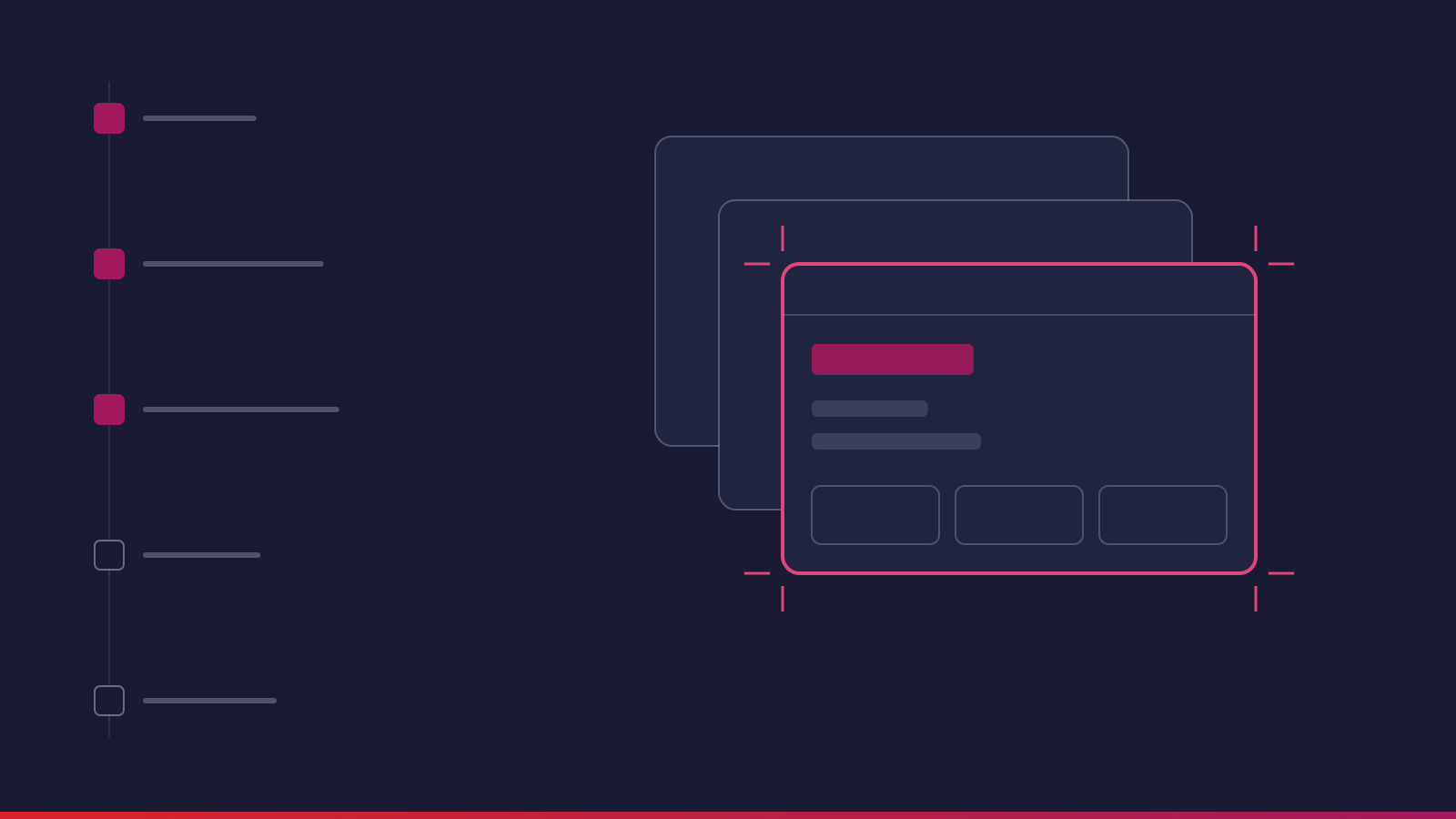
- 01 Discoveryworkflow mapped with real users
- 02 Prototypeclickable flows tested twice
- 03 Architecturetenancy, integration, security
- 04 Releasetests, pipeline and rollback
- Operational platform
- Rules in configuration
- Code in your accounts
What you get
7 deliverables, all yours to keep
- Discovery write-up and signed first-release scope
- Clickable prototype tested with real users
- Architecture decision record
- Production application with tests and pipeline
- Monitoring, error reporting and rehearsed rollback
- Handover documentation from the engineers
- Source code and infrastructure you own
Sound familiar?
Who hires a custom software development company like ours
As a custom software development company, we build for the gap between the systems you already own, which somebody fills by hand every day. That gap looks like supplier onboarding through email, approval rules no ERP can express, or three SaaS tools and a person reconciling them. The answer is rarely a bigger subscription. It is usually a system designed around the specific rules you operate under.
We have built operational platforms, self-service systems and software products more than once. A construction enterprise’s vendor platform replaced spreadsheet and email procurement for hundreds of suppliers. The code sits in your repositories from the first commit, and users should be working in the system within 5–8 weeks. If you want to start smaller, our product engineering capability covers the 4–6 week MVP route in more detail.
-
Supplier onboarding runs on email, shared drives and a tracker
Hundreds of suppliers move through a process nobody trusts, and someone fills the gaps by hand every day.
-
Partner approvals depend on paper KYC and one manager's inbox
Approvals across the distribution network move only as fast as that inbox, with no shared record of where a partner stands.
-
The ERP holds the numbers but cannot express the approval rules
Policy lives in people's heads rather than in the software that is supposed to enforce it.
-
A first version built for a demo now strains under real customers
The product struggles with its real customer base, and every new account adds load to a design never meant for it.
-
Three SaaS tools bought to cover one workflow
The subscriptions keep renewing, and you now pay a person to reconcile them.
-
Compliance checked after the fact in a regulated process
Travel or expense rules are checked once the request has gone through, instead of inside the workflow.
The work
Inside a Custom Software Development engagement.
What our custom software development services cover
-
Operational platforms
Vendor management, partner onboarding, approvals and governance: the systems with the most business rules and integrations. Platforms of this type bring vendor processing up to 42% faster.
-
Employee and self-service systems
Travel, expenses, requests and approvals where the software enforces policy. For a large global financial services company, travel approvals were rebuilt with the policy checks inside the workflow.
-
Software products
Products you sell, with the subscription, tenancy and usage analytics that a product needs and an internal tool does not.
-
Enterprise software, released in increments
No year of requirements before anyone sees a screen. Even on a long program, users should be working in the system within 5–8 weeks, even if it covers one region.
How we approach a custom build
- 01
The data model comes from the flows, not the old database
Legacy schemas carry decades of fields no screen needs. We draw the model from workflows tested with users, then map the legacy data into it during migration.
- 02
Architecture is decided late on purpose
Tenancy, queueing, caching and permissions are settled in design, once we know what the system does. Deciding them against a guess is how teams end up retrofitting multi-tenancy two years in.
- 03
Configuration beats code for rules that change
Approval thresholds, commission rules and document requirements live in configuration with an audit trail, so a policy change does not need a release.
- 04
We tell you when to buy instead of build
If a mature product covers the job, commissioning a custom one is a poor use of your budget, and we say so in discovery.
Where custom software projects go wrong, and what we do about it
-
Scope agreed before anyone spoke to a user
Discovery runs with the people who do the work. A one-page first-release statement is signed and brought to every review.
-
Integrations that depend on another team's calendar
When an API is late, release one gets a file import and release two gets the API. The launch date does not wait on someone else's backlog.
-
Built for the demo, not the load
A system that works for a handful of testers can fail with 500 concurrent users, so we test performance against realistic volumes before launch.
-
No way back when a deployment fails
Every deployment can be reversed and the first one is rehearsed. Monitoring and error reporting go live with the first release.
-
Knowledge that leaves with the vendor
The engineers who built the system write the documentation, and the code lives in your repositories from the start, so a move in-house is planned.
How it runs
From first call to production.
-
Discovery
About a week with the people who will use the system. We map the workflow as it runs today, workarounds included, and agree what the first release must do.
-
Design and prototype
Flows become a clickable prototype and are tested with users at least twice. The data model is drawn from the flows, not copied from the old database.
-
Architecture
Tenancy, permissions, integrations, queueing and caching are settled against a design known to be right, and written down with the reasons.
-
Build in one-week cycles
Working software demoed every week, and the pipeline runs tests and security checks on every commit.
-
Launch and stabilize
Real users in production with monitoring on. Performance checked under realistic load, then a handover or a pod that carries the product forward.
Team and timeline
5–8 weeks
for a defined first release
Indicative. Actual duration depends on requirements and complexity, and can change.
Who works on it
- Product consultant or architect
- UI/UX designer
- Two to four full stack developers
- QA engineer
- Project manager on larger programs
Engagement model
Fixed Cost for a defined first release. Dedicated Team or Time and Materials for platforms that keep evolving after the first release.
Good to know
Fixed Cost for a defined first release, Dedicated Team for platforms that keep evolving, and Time and Materials where scope moves, as on our 15 to 24 month platform engagements. You speak to the engineers directly.
Proof
Where we have built this.

How a leading construction enterprise improved vendor processing by 42%
faster vendor processing

How a leading energy enterprise reduced partner onboarding time by 45%
faster partner onboarding

How a large global financial services company reduced travel processing time by 38%
faster travel processing
FAQ
Custom Software Development: common questions.
How do I choose a custom software development company?
Ask to see how they decide what not to build. Any firm can show a portfolio. Fewer can show a discovery write-up, a signed first-release scope and an architecture decision record from a real project. Then ask who you will speak to each week. If the answer is a project manager relaying questions, expect delays whenever a decision needs an engineer.
When is custom software better than an off-the-shelf product?
When the process is the thing that differentiates you, or when your workarounds have become the process. If a SaaS product covers most of the job and the gap is reporting, buy it. If the missing part is how partners get approved, paid or governed, configuration will not reach it, and you will end up running a spreadsheet beside a subscription.
How long does custom software development take?
A focused first production release typically takes 5–8 weeks: about one for discovery, one to two for design and a tested prototype, two to four for build and one for stabilization and launch. Platforms that replace several systems run longer. Our vendor, partner and travel platform engagements ran between 15 and 24 months, delivered in releases so users had working software long before the end.
Who owns the source code?
You do, from the first commit. The repositories, cloud accounts and deployment pipeline sit in your organization's accounts, and we work inside them. That makes handover a transition plan rather than a negotiation, and it means you can change vendor, hire in-house or keep a pod with us without anyone holding the code hostage.
Can you work with our existing systems and internal team?
Yes, and most enterprise work requires it. We integrate with ERP, identity, payment and document systems through their APIs, and where an API does not exist we agree an interim route such as scheduled file exchange. Your engineers can sit in the same sprints, review our pull requests and take ownership of modules as the platform matures.
Related services
- MVP DevelopmentA 4–6 week cycle from discovery to a deployed product with real users. Scope moves, the date holds, and you own the code from day one.
- Web Application DevelopmentSaaS platforms, customer portals, commerce and internal systems in React and Node.js, with performance, accessibility and tenancy decided before the first sprint.
- Legacy Application ModernizationLegacy application modernization in reversible slices. The old system stays live while each function is rebuilt, shadow tested and cut over on its own.